Wednesday, November 2, 2022

International Students and work-hazard exposure: Are we managing their risks?

Recent changes in Canada and Australia allow international students to increase the hours they work outside their studies. 


Previously, international students in Canada were permitted to work only 20 hours per week outside their school programs; that limit has been temporarily removed until December 31, 2023.  Australia moved earlier and lifted a similar cap until June 30, 2023.  In the US, an on-campus 20-hour restriction exists during sessions with additional hours during breaks and specific exceptions for certain groups and circumstances. Demand for workers means more students working more hours in more sectors in the economy.


Clearly, the easing of restrictions on work hours is intended to alleviate labour shortages, particularly in the service sector.  That said, many students work in many other sectors of the economy.  In my own experience, I have met international students working in construction, manufacturing, transportation, warehousing, and healthcare.


Increased Hours = Increased Risk


With unlimited hours on top of studies and on-campus work (often part of their studies), international students are exposed to more hazards.  Recall that risk is the chance or probability of harm from a work-related hazard.  That increased risk is greater than you might expect.


First, the risk of injury and occupational disease is related to exposure.  For most jobs, one can think of exposure in terms of hours exposed to the hazards present in the workplace.  Increased hours alone account for increased risk in the population of international students who engage in employment.  Holding the number of international students constant and increasing their exposure to work hazards through increased hours, increases the likelihood of occupational injury and disease.


Fatigue and Risk


A second factor can increase the risk beyond a straight linear relationship.  The fatigue – risk relationship is an accepted fact.  NIOSH-CDD writes:


Fatigue can slow down reaction times. Reduce attention or concentration, limit short-term memory and impair judgement…High levels of fatigue can affect any worker in any occupation or industry with serious consequences for worker safety and health. 

[See https://www.cdc.gov/niosh/topics/fatigue/default.html ]


Published studies rarely focus on non-work sources of fatigue outside of commuting time and breaks between shifts.  Study time, family needs and other factors can add to fatigue and increase risk.  Some industries have modeled hazards and fatigue related risks [for example, see Transport Canada, Fatigue Risk Management System for the Canadian Aviation Industry - Introduction to Fatigue Audit Tools - TP 14577 available at https://tc.canada.ca/en/aviation/publications/fatigue-risk-management-system-canadian-aviation-industry-introduction-fatigue-audit-tools-tp-14577 ]


Models and studies of enhanced risk facing resident and foreign students are lacking but the implication of existing knowledge is that the added hours of exposure to potential harms may disproportionately increase risk of injury or disease.


International Student Population


The population of foreign students is not trivial. Australia, Canada, and the US are three of the top five destination countries for foreign international students, accounting for more than 2 million of the estimated 5.6 million international students world wide. 

Rank


Country


International student population (2020)


1

USA

1,075,496

2

UK

551,495

3

Canada

503,270

4

China

492,185

5

Australia

463,643

3,086,089


[see https://studee.com/guides/10-most-popular-countries-for-international-students/ ]


These are significant numbers.  Policy changes expanding hours increase the potential labour supply of this population’s in terms of allowed work opportunities may be needed to address demand for labour in the economy.  Current labour market shortages are evident in many jurisdictions.  Along with inflation, rental housing shortages and increased costs for transportation and study materials (particularly technology), international students may have a greater motivation to take advantage of greater opportunities for employment. 


Stock, Flow and Foreign Student Population Measures


International students pose a challenge for those charged with designing health, safety and workers’ compensation awareness programs for them.  At any given time, the population of international students can vary.  Most courses of study span a calendar year or more.  Study visas may be valid for or across multiple years, but students may enter and leave the jurisdiction as part of their studies or simply to return home for part of any given year. This is the “flow” of international students.


Unlike refugees and new immigrants (definitionally,  permanent or extended-stay residents including asylum seekers) or temporary foreign workers (individuals contracted for periods of greater than a year or returning on a seasonal basis), foreign students are generally in the jurisdiction for shorter periods (not permanently).  At any given time, the population or “stock” of foreign students may exceed the “flow” or count of new arrivals. 


Once a cohort of new immigrants or temporary foreign workers is oriented to health and safety or workers’ compensation in the jurisdiction, they are often considered part of the resident population in terms of knowledge and awareness programs.  With foreign students, the “stock” is ever changing and the challenge of raising awareness, building trust, and informing them of their rights and obligations never wains.


Experience and expectations


Workplace culture is not universal.  Attitudes and beliefs regarding workplace health and safety vary widely.  Experiences and understandings about workplace health and safety and workers’ compensation also vary by country.  It is not reasonable to assume all international students bring the same understanding to the workplace.


Consider the following: 


Canada's top 10 international student source countries (by number of study permit holders on Dec. 31, 2021)


India

217,410

China

105,265

France

26,630

Iran

16,900

Vietnam

16,285

South Korea

15,805

Philippines

15,545

United States

14,325

Nigeria

13,745

Mexico

11,550


[ See https://www.cicnews.com/2022/03/canada-welcomed-450000-new-international-students-in-2021-an-all-time-record-0323762.html#gs.fl1tae ]


US: Number of international students studying
in the US in 2020/21, by country of origin


China

317,299       

India

167,582       

South Korea

39,491      

Canada

25,143      

Saudi Arabia

21,933      

Vietnam

21,631      

Taiwan

19,673      

Brazil

14,000      

Mexico

12,986      

Nigeria

12,860      

https://www.statista.com/statistics/233880/international-students-in-the-us-by-country-of-origin/


Australia: Number of international students
studying Australian courses January-July 2022


China

141,567         

India

86,782         

Nepal

51,579         

Vietnam

19,932        

Indonesia

14,865        

Malaysia

14,135        

Thailand

14,015        

Brazil

13,963        

Philippines

13,703        

Colombia

13,661       

 [ See https://www.education.gov.au/international-education-data-and-research/international-student-numbers-country-state-and-territory ]


With the possible exception of international students from Canada, the US and Australia studying away from home in one of the other countries in this grouping, foreign students will have no prior understanding of the jurisdictional authorities responsible for workplace health, safety and workers’ compensation. I could find no study contrasting the a priori understanding of international students regarding workplace laws, duties, and responsibilities.  While resident citizens will have some understanding from their indirect exposure through media, family, and community, it is unlikely that all foreign international students will bring an equivalent common understanding with them.


International students should not be “lumped in” with strategies designed for other temporary foreign workers.  Most temporary foreign workers are required by their visas to work for specific employers; international students may be employed in multiple sectors by multiple employers and may change employers frequently. This adds a further challenge for those seeking to increase protections for and gain the trust of international students and those who employ them. 


Are workers’ comp and OH&S adapting


Workers’ compensation agencies and prevention organizations are not always quick to react to changes in the demographics of their target populations.  International students are a special demographic segment of their target population. 


As noted, Canada, the US and Australia differ from other countries in who has jurisdiction over workplace health, safety and workers’ compensation laws.  Most countries in the world that have social security arrangements for work injuries have national programs.  While efforts to increase the knowledge of residents on workers’ compensation and occupational health and safety  through advertising and inclusion in high school curricula in Canada, the US and Australia; similar awareness programs and educational curricula may not exist in the home countries of many international students.  Failure to adequately inform international students may lead to their injury, potential under-reporting of hazards, and suppression of workplace rights. 


So, what are authorities responsible for workplace health, safety and compensation doing to address this change?  How are they working to communicate worker rights to this unique population, helping their employers understand risks, and making others in the workplaces more aware to foreign student issues?


To be clear, this is not just a question of language.  Nearly all international students are required to have official language proficiency just to qualify for admission as students.  Understanding, trust, access, and support go beyond translating brochures and webpages.  If you can find a workers’ compensation authority or OH&S doing a great job gaining the trust of foreign students, let me know.  I could find no public-facing statements or studies on this issue.  Foreign students need to know that their status and right to work are not at risk by engaging with health and safety agencies or filing a workers’ compensation claim.


I also found little in the way of data on the risk differences (if any) faced by international students.  Do they experience similar levels of injury or risk as resident workers remains an unanswered question.  Few workers’ compensation jurisdictions identify international students in their data –a necessary categorization if we are to determine work-injury risk, claims rates, or establish the likelihood of under-reporting of workplace injury in this population.


Taking action to help protect international students and serve them requires action by workers’ compensation and prevention authorities.  These actions include:

•       Collecting data on international student injuries

•       Interacting with specific international student groups

•       Determining where international students are working and being injured

•       Educating international students and their employers on their rights and building trust

•       Actively seeking to minimize under-reporting of workplace injury, illness and disease involving international students

•       Comparative research on risk, frequency, severity, and outcomes of injured international students vs. resident student workers


Societally, we want and need international students more than every.  They can be a resource that will help level the gaps in our labour force and skill needs. Takin intentional and robust steps to understand and address their needs is more important now than at any point in the past.   

Sunday, September 18, 2022

Top Ten Priorities for Workers’ Compensation Benefit Reforms

 Workers’ compensation “reforms” are typically focused on reducing employer costs.  Enacted reforms often result in restrictions that limit rather than enhance benefits to workers. 


In the US, the National Commission on State Workmen’s Compensation (1972) [available at https://workerscompresources.com/national-commission-report/] laid bare the disparity then present across US jurisdictions and established recommendations for the minimum standards of what workers’ compensation should provide.  Sadly, even the minimum levels recommended by that report are often missing from current workers’ compensation statutes. 


Workers bear the cost of work-related injury


In a recent event to mark the 50th anniversary of the National Commission, a US Department of Labor panel met to discuss the progress and the lack of progress in workers’ compensation reforms in the US.  [See https://youtu.be/fRAZJ2PosE0] Progress towards improving compensation for workers was noted; so were the many gaps and shortfalls in the present landscape of state workers’ compensation laws. 


US workers’ compensation benefits generally lag those provided under the Canadian provincial and Australian state workers’ compensation systems.  Workers have no choice but to bear the physical, psychological, and social costs of work-related injury illness and disease.  Policy makers have options in their policy choices to lessen the financial losses workers and their families must also bear.


RAND’s “Earnings Losses and Benefit Adequacy in California's Workers' Compensation System-Estimates for 2005–2017 Injury Dates” [see https://www.rand.org/pubs/research_reports/RRA964-1.html]   clearly show that occupationally injured workers suffer significant income losses over their non-injured counterparts despite workers’ compensation.  A similar methodology applied to Ontario by the Institute for Work and Health found about half of workers achieved earnings levels similar to their uninjured counterparts when taking post-injury earnings, Canada Pension Plan-Disability benefits, and workers’ compensation payments into account [see https://www.iwh.on.ca/summaries/issue-briefing/measuring-adequacy-of-workers-compensation-benefits-in-ontario-an-update ].


Top Ten Priorities for Workers’ Compensation Benefit Reform


Legislators and policy makers have options in any workers’ compensation reform package.  I have provided analysis for many of these options in this blog series and directly to policy makers in many jurisdictions.  Here are my top ten priorities.


1.  Make prevention the top priority


In the words of the National Commission, Workers’ compensation provides “a built-in stimulus to safety” and recommended insurers (including self-insurers and state-run insurance systems) sufficiently fund loss prevention and safety programs.  Prevention should be the number one priority.   The occupational injury, illness, disease, or death prevented is the single best benefit for worker and their families.


Based on media coverage, employer cost rather than worker safety and health dominate the discourse on workers’ compensation reforms.  Costs are important and reforms must be viewed through the lens of their impact on safety and health.  If base premiums or experience rating raise employer costs, there will be greater focus on loss prevention, safety, and health of workers. The converse is also true; if the cost of workers’ compensation fails to reflect the true financial cost of work-related injury, illness, disease and death, there is less of an incentive towards prevention. 


Note:  That’s not to dismiss the concept of effective cost control once a work-related injury occurs.  Effective claim management, active return-to-work measures, prudent reserve investments, effective audit, and other administrative functions are essential.  Waste and inefficiency in the administration of workers’ compensation systems can inflate costs in a way that damage both workers and employers.


The proportion of those financial losses covered by workers’ compensation covers varies across jurisdictions but generally fall well short of making up for workers’ financial losses incurred because of the work-related injury. Reforms that reduce that burden injured workers and their families also increase the safety stimulus workers’ compensation places on employers.


There are two mechanisms by which the net workers’ compensation costs employers pay may under-represent the cost of workers’ compensation: subsidies and cost shifting.  Subsidies may include return of premiums, dividends, distribution of surplus gains on reserves. Some jurisdictions have implemented controls to limit or prohibit subsidies being distributed to employers with poor safety records or workplace fatalities—not a bad idea to further underscore the prevention priority.


While subsidies are often quantified, cost shifting mechanisms are not.  The greatest cost shifting is externalization of the worker’s lost wages to the worker.   Injured workers and their families are forced to carry much of the loss from savings, family resources or community sources.  Some are allowed and even encouraged to use other entitlements or benefits such as group short-term disability or sick leave to make up for the shortfalls between regular earnings and workers’ compensation payments. 


Subsidies and cost shifts hide the true cost of work-related injury and the intended stimulus of workers’ compensation costs toward increased health and safety.


2.  Extend Who is covered by Workers’ Compensation


Workers’ compensation laws evolved by adding to mandatory coverage specific industries and sectors.  This left gaps and focused debate on each sector on a piece meal basis.  Some jurisdictions have opted for universal coverage laws:  Every industry and every worker is covered unless explicitly excluded.  This “everyone in” option is a fundamental public policy shift; exclusions are still allowed but force serious discussion of principles, criteria, and rationale.  Given the high percentage of jobs now covered by workers’ compensation in the US, Canada and Australia, opting for universal coverage makes sense.


Regardless of the legislative approach (universal with exceptions, or comprehensive sectoral listings) exclusions from coverage are still common.  Exclusions in some jurisdictions include


Agricultural workers

Certain family members

Domestic workers

Small companies with fewer than five workers

Gig workers


While some statutes allow for optional inclusion of such categories, such exclusions are a far cry from the goal of universal coverage.  The National Commission report stated workers’ compensation coverage “should be extended to as many workers as feasible”.  Universal coverage remains an illusive goal in many jurisdictions but should remain a high priority.

3.      

3. Extend What is covered by workers’ compensation


Mental injuries, certain cancers, and a variety of other diseases are known to be work-related on a population level but vastly under reported and compensated by workers’ compensation systems.  The question is not “which of these should be included in coverage” but rather “what policy changes are needed to ensure that more cases are accepted”. 


Covid-19 exposed serious gaps in workers’ compensation coverage of occupational disease.  In the absence of presumptive provisions, many front-line workers were not eligible for coverage from work-related disease.  Establishing presumptive provisions or temporary policy orders may have worked for this special case (some provisions are still being developed and applied while others have lapsed), but what about for other occupational diseases and future pandemics?  


The standard of proof and onus of proof in many systems is far too restrictive.  “Predominant cause” provisions are more common in the US now than fifty years ago.  Rather than “taking the worker as you find them” and considering the work-relatedness at a lower standard, both the higher standard of proof and shifting onus of proof discourage attribution of injury or disease to work.  Reforms here may involve re-establishing a lower test and shifting the onus away from the worker having the burden of proving work-relatedness.  Increasing presumptive provisions to ensure workers are covered when work is of causative significance in the development of injury, illness, disease, or death is a policy option we saw used in the COVID-19 crisis.  If the work-relatedness of any harm is not recognized, there will be little stimulus toward its prevention. 


4. Raise Maximum Insurable Earnings (Maximum Weekly Benefit)


For many jurisdictions, the maximum insured earnings or maximum weekly benefits payable effectively limit compensation.  For higher earners, the maximum limitation means take home or spendable income following injury may be cut in half or more.  Higher wage earners must effectively self-insure their losses above the maximum (or negotiate supplemental coverages that are not reflected in workers’ compensation data).  Loses may be catastrophic for families with costs externalized to the community as a result.


While many jurisdictions outside the US have increased insured earnings maximums, there is no standard formula or target established in most jurisdictions.  Setting a goal of covering the work earnings of at least 95% of employees in the jurisdiction would ensure almost all workers could continue to meet financial needs following work-related disability.


My October  2019 post explores this further  “Are wages or salary fully covered by workers’ compensation insurance?”

5.     

5.  Increase the Compensation Rate


The National Commission recommended a compensation rate “at least 80 percent of the worker's spendable weekly earnings.”  Note the “at least” portion of that recommendation.  While most US states have reached what the National Commission termed as “transitional basis” of two-thirds of gross, some have lower compensation rates (such as New Hampshire at 60% of gross). 


In Canada, most workers’ compensation jurisdictions compensate at 85-90% of net average earnings (Nova Scotia is an exception at 75% of net for first 26 weeks with a “step up” 85% thereafter).  On Canadian jurisdiction (Yukon) calculates compensation on a 75% of gross basis. In Canada and the US, workers’ compensation payments are not taxable.


Australian states have a variety of compensation rates ranging from 85% to 100% of normal weekly earning in the initial 13 weeks.  “Step-downs” associate with length of claim are increasingly common after this initial period.  Note, wage-loss compensation in Australia is taxable although lump-sum payouts and settlements are not. [See    https://www.safeworkaustralia.gov.au/doc/comparison-workers-compensation-arrangements-australia-and-new-zealand-2021]


6.  Eliminate the Waiting Period


In the US, for the initial period of total disability from many work-related injuries (typically 3 to 5 days), workers are effectively self-insured for earnings losses.  The “waiting period” is a deductible imposed on workers. Workers must self-fund this initial period of loss. While some employers allow the use of sick leave or vacation credits to be applied to cover the waiting period, these are generally part of the taxable benefits already paid for by the worker and effectively self-funding.  


Most jurisdictions waive the waiting period for accepted injuries after a “retroactive period” where disability extends greater than a specified number of days or weeks.  Some jurisdictions on’t waive the waiting period at all.  For those states (Hawaii, Oklahoma, and Rhode Island) there is no retroactive period;  all workers suffering wage losses in these jurisdictions have no workers’ compensation indemnity benefits for the waiting period. Nearly a dozen states have retroactive periods of greater than 14 days (Alabama, Florida, Indiana, Kansas, Massachusetts, North Carolina and Virginia all have a 21 day retroactive period; Alaska and New Mexico have a 28 day retroactive period; Nebraska as a 41 day retroactive period).   


That National Commission recommended “…the waiting period be no more than 3 days and that the retroactive period be no more than 14 days”.  Note the “no more than” part of that recommendation—a clear minimum limit.  In the US, I count only 16 states that have met that minimum.  No US state has eliminated the waiting period. 


Although once common in Canada, waiting periods have been eliminated in all but one jurisdiction (Nova Scotia has a 2/5ths of a week waiting period and a retroactive period of 5 weeks). Australian systems generally have no waiting period for workers.  Several states require employers to pay workers directly during their first 5 or 10 days of work-related disability before the workers’ compensation insurer commences payments. 


The waiting period is effectively a subsidy to employers, relieving them of liability for the wage-loss compensation cost of work-related injuries. Waiting periods externalize those costs to workers, their families and often the community. The elimination of waiting periods increases the proportion of the actual cost of work-related injuries nominally paid by the employers. 


7.  Raise or Eliminate Age limits or age-related limits on benefits


My recent post on this topic has additional details and, full disclosure, age limits would impact me if I suffered a work-related injury today. 


For years I have spoken about demographic changes, and I posted some current data on this topic in July. 


Today we are seeing the population projections we all knew were coming playing out.  In Canada, the US and Australia, there are growing numbers of older workers in the workforce.  This fact is not just a consequence of aging baby boomers but the growing participation of older workers in the employed labour force. 


What’s driving this greater participation is multifactorial. Apart from the consequences of the pandemic, more of us are living longer and are more fit and healthy in that longevity.  Economics of living longer let alone recent economic challenges brought on by the Great Recession and the pandemic have driven more older workers to stay in or return to the workforce well beyond historical retirement ages.


We need these older workers in the work force.  And they deserve adequate workers’ compensation coverage.  Policies that effectively limit their access to benefits based on social insurance retirement eligibility or a couple of years based on age should be changed.


8.  Increase Funeral/Burial expense coverage


Each work-related death is a tragedy.  Compounding grief and emotional loss with heavy financial costs makes no sense.  Despite the rarity of such tragedies, the financial costs of funerals and burials can be substantial.   Unfortunately, families and communities must bear a disproportionate financial burden as a result.


Most workers’ compensation systems cover some funeral or burial expenses.  The cost of the average funeral has risen but the benefit provisions in most statutes are stubbornly resistant to increases.  At a minimum, families or the estate of a fatally injured workers should receive sufficient funds to cover related funeral and burial costs. 


Some jurisdictions do not cover costs if there is no funeral or burial.  If a worker is lost in a flood and the body not recovered, should the workers’ death be costless to the workers’ compensation system?  Clearly, this should not be an option.  What policy makers must decide is what minimum amount of the be provided to the estate in every case and what additional reasonable costs to memorialize and celebrate the life of the worker should be accepted.   


 9.  Provide a Lump-sum Death Benefit


What is the value of a life lost at work? Policy makers have options in answering that question.  I recommend that every policy makers sit across from a grieving spouse learning that the work-related death of a partner before addressing that question.  Speak with the survivors and dependents.  Talk with parents or children having lost their son, daughter or parent.  From experience, I can say their losses—financial, emotional, and personal—are immense and not differentiated by the earnings level of the fatally injured worker at the instant of their work-related death.


All workers have unrealized opportunities – often unimaginable positive ones—that are lost upon death.  Those losses have nothing to do with past earnings.


Some jurisdictions have moved away from wage-based compensation to lump sums. 
For example, a lump-sum death benefit equal to the benefit a maximum wage earner’s yearly compensation for temporary total disability recognizes lost futures.  Thankfully work-related fatalities are relatively rare.  Increasing compensation will add further incentives toward improved safety.


10.  Inflation protection


Back in January 2019, I posted some background on the question “Are Workers’ Compensation benefits protected against the rising cost of living?”.  Many workers’ compensation system do adjust payments to workers on long-term claims or permanent disability.  Just how those adjustments are calculated and applied varies widely.


The cumulative impact of inflation when it was running below two percent was modest over the term of most temporary disability claims.  That impact is much greater when annual inflation hits seven, eight or even nine percent. 


Fair, predictable protection of the purchasing power of workers’ compensation benefits should be built into legislation.


Is anyone reforming workers compensation benefits currently?


Many systems have proposed or enacted changes to workers’ benefits but most are limited to modest increases in the maximum insurable earnings.  One of the most ambitious proposals was recently posted for the provincial workers’ compensation system in Prince Edward Island, Canada.  The proposal includes:


Increase benefit rates for workers off work due to an injury from 85 per cent of net pre-injury earnings to 90 per cent.

Increase the cap on annual long-term benefits indexation to six per cent from four per cent. 

Reset the maximum assessable earnings to current Statistics Canada data each year. 

In the case of a workplace fatality, increase financial support for burial expenses to $15,000 from $7,500. 

Increase the lump sum death benefit to 100 per cent of maximum annual earnings. [see an archived version of the proposal at https://web.archive.org/web/2022
0628225241/http://wcb.pe.ca/DocumentManagement/Document/leg_benefitenhancementsconsultation.pdf
]


Which of these policy options will make it into this jurisdiction’s workers’ compensation reform legislation is not known at this writing.


Some closing thoughts


The RAND study noted above asserts [page 106]:

…[T]o improve adequacy, there are two options:

·       Policymakers can increase benefits or

·       reduce earnings losses through increased earnings and employment for workers with disability


The latter path still exists.  The fact or its existence has not changed worker outcomes significantly in years.  The employer’s “duty to accommodate”, mandatory reinstatement laws, and vocational rehabilitation provisions have been around for years yet work-related injury still imposes heavy financial costs on workers that are not offset. 


Workers’ compensation benefit enhancements are needed to mitigate at least some of the losses imposed on workers. Policy makers have options to begin to do just that. 


Tuesday, July 5, 2022

Are workers’ compensation laws keeping up with changing demographics?

For more than twenty years I have been speaking about demographic change to workers’ compensation insurers in the hopes of spurring policy changes in advance of an aging workforce and greater numbers of older workers in the workplace.  To my regret, my presentations on “Demographic Effects”, while warmly received were not the catalyst for early and significant policy development. 

Population projections presented in the 1990s and early 2000s told us what was coming.  Now, the current census and population data growth confirm those projections. We new this was coming but many policies are still anchored in the past.


One key consequence of changing demographics in Canada, the US, and Australia is the increasing number of older workers in the overall population and the work force.  Workers’ compensation and occupational health and safety are not keeping pace.  The implications of demographic change are obvious:

  •     More older workers in the workplace
  •        More workers working beyond traditional retirement age

  •        
    More co-morbidities and longer recoveries following work-related injury, illness, or disease


We new these issues were coming based on static participation  and employment rates (employment to population ratios) additional economic factors have amplified the trends:

  •        Plummeting unemployment rates creating greater demand for retention of older workers
  •        Skyrocketing living costs driving more workers back to the labour force
  •        Rising job vacancies stoking demand for older worker recruitment and workforce re-entry.


Every corporate planner anticipated a pandemic would arise at some point.  The pandemic timing and its attack on older individuals added stress to a tight labour market:

  •        Aging cohorts of healthcare workers hitting retirement age just as demand for their services peak
  •        Industries like trucking/transportation with high average age have massive job vacancies, exacerbating supply chain woes
  •        Quarantine, isolation, and other prevention measures to control risk to workers driving required work absence with inadequate mechanisms for their support


For older workers, particularly those age 65 to 69, employment rates are trending higher. In the US (source: US BLS Current Population Survey, quarterly, non-seasonally adjusted 2002 and 2022 extracted June 2022):

  •       The employed non-farm labour force age 65 and over has increased by 2.5 times since 2002
  •        Nearly 20% of persons 65 and older is now employed in the labour force
  •        Nearly a third of persons aged 65 to 69 is employed
  •        36.4% of males aged 65 to 69 are employed (Q1 2022) vs. 29.5% in (Q1 2002).


Canadian data reveals a similar pattern (Statistics Canada: Labour Force Characteristics – unadjusted - Table: 14-10-0017-01):

·       The employment rate of 65- to 69-year-old has more than doubled from under 13% to more than 26% (May 2002 to April 2022)

·       Employment rate of women aged 65 to 69 has increased more than 2 and a half times over the same period (May 2002 to April 2022)


State and provincial data often show even more dramatic shifts. Extracting provincial data from the same series, British Columbia has seen a massive shift in the employment of workers age 65 and older:

  •       The monthly unadjusted BC employment rate of 65- to 69-year-olds now routinely exceeds 35%
  •        More than a third of males (36.2% average) and a quarter of females (25.7% average)  age 65 to 69 are employed (Jan-Apr 2022)

A recent Australian study reflects similar increases in participation among older workers (Australian Institute of Health and Welfare (2021) Older Australians, accessed 10 May 2022):

  •        Older Australians (aged 65 and over) had a workforce participation rate of 15% (19% for men, 11% for women).
  •        The workforce participation rate of older Australians more than doubled (from 6.1% in 2001 to 15% in 2021) in the last two decades.
  •        The participation rate for men 65 and over almost doubled (from 10% to 19%); for women aged 65 and over, the participation has almost quadrupled (from 3.0% to 11%).


The rapidly growing number of older citizens, record demand for labour, economic imperative of rising prices, and the social shift towards working later in life mean the workplace is seeing and will continue to see more older workers.


Many workers’ compensation systems impose limits on benefits for older workers.  Legislation developed twenty or thirty years ago may have reflected a social context that anticipated early retirement; “freedom 55” may have been a mantra decades ago.  Today’s data show the trend is much to the contrary:  working well beyond normal retirement is becoming both a societal expectation and an economic imperative for many older workers.


Most Canadian jurisdictions have some sort of age restriction on receiving workers’ compensation.  The duration of temporary total or partial disability is typically limited to two years following the date of injury for most workers age 63 and older, although there are exceptions for those with documented working plans or typical later retirements. Some jurisdictions have similar restrictions beginning a little later or providing longer duration (Quebec with age 64 and four years maximum) or a little earlier (Manitoba age 61).  Permanent disability provisions are increasingly limiting on-going financial support for workers over age 65 after prescribed duration limits but typically continue to cover disability-related medical and certain other perspectives. (See AWCBC, Workers’ Compensation – Temporary Total Disability Compensation, accessed June 16, 2016 from https://awcbc.org/en/summary-tables/benefits-and-rehabilitation/)


Most US jurisdictions do not have an explicit age limit on temporary total benefits, but many have other limitations on benefits that effectively truncate or permanent benefits for workers of all ages after a certain number of weeks (104 weeks in West Virginia, 312 weeks in Utah, 500 weeks in South Carolina as examples).


Permanent Total Disability may be paid for life or as long as the disability lasts ( see Wisconsin, South Dakota, Nebraska, and Iowa as examples) or have explicit duration limits (300 weeks in Alabama for example) or age limits linked to Social Security retirement ( as in Montana and Tennessee).


Some jurisdictions have evolved their coverage over time. In Minnesota, permanently disabled workers may receive benefits for life, to a presumed retirement age of 67 or 72, or for a term of 5 year depending on when the injury occurred.    


In many states, there are “settlements” or “compromise and release” arrangements (as in California) that may capitalize a present value award but typically factor in jurisdictional limits.  (See NASI, 2021 Workers’ Compensation Report – 2019 Data [Appendix D- Table D] – retrieved June 16, 2022 from https://www.nasi.org/research/workers-compensation/workers-compensation-benefits-costs-and-coverage/)


Australia’s coverage provisions under the individual state workcover schemes are varied.  Western Australia removed its restrictions in 2011, Queensland does not have a retirement provision per se but does have a five-year maximum provision.  Some states have a 12  or 24 month provision (New South Wales, Australian Capital Territory), or more complex provisions.  Take Victoria’s coverage of retirement provisions (as extracted from Safe Work Australia,  Comparison of workers’ compensation arrangements in Australia and New Zealand (2019), [Table 2.4e] as retrieved June 16, 2022):

Retirement age means the age at which the worker attains pension age within the meaning of the Social Security Act 1991 (Cth).  Under s171, workers are not normally entitled to payments under the Act after attaining retirement age, except in the following circumstances:
if injured within the period of 130 weeks before attaining retirement age or at any time after attaining that age, the worker is entitled to weekly payments for no more than the first 130 weeks of incapacity for work — s169, Workplace Injury Rehabilitation and Compensation Act 2013 or

           if worker’s incapacity after reaching retirement age relates to an injury suffered within the preceding 10 years and if the incapacity is due to inpatient treatment, the worker is entitled to weekly payments for a limited period of up to 13 weeks — s170, Workplace Injury Rehabilitation and Compensation Act 2013


It may be late in this demographic shift but not to late for workers’ compensation law and policy makers to come to grips with this reality.  Here are some suggestions:

1.        Review current law and policy through the lens of older workers to ensure needs are properly addressed.

2.       Recognize that with age often come co-morbidities and conditions that may extend recovery and claim duration that require additional time or treatment over the standard

3.       If legislation limits are triggered by ages such 61, 63, 65 or 67 or indirectly by a cited “social security” eligibility, revisit these limits and increase them at least for the population 65 to 70 where the data clearly show large increases in participation and employment rates.


A glance at the population pyramids as they stand now or projections for the next few decades show this shift is not over.  And unless the population under 50 grows naturally or through significant immigration, the participation of even greater numbers of older workers in the labour force is likely.  Hopefully, public policies can catch up and keep up with this workplace reality.


Saturday, May 14, 2022

Will the endemic COVID-19 world be any safer?

 COVID-19 has disrupted so much in our lives.  Over the past year of this pandemic, many of us have had to move online for work, attend funerals and family gatherings by Zoom, forego in-person visits, shop on line, learn about and us masks, and sanitize hands until they hurt. 


On top of these changes, life goes on with its own challenges.  Family members get ill, cars break down, and homes need repair.  The pandemic complicates our lives and the access to services to support our families.  Thank goodness for the workers who continue to provide them throughout this pandemic. 


UV Germicidal Irradiation


As I sat in hospitals with family members needing care and treatment for non-COVID-19 conditions, I had hours to observe medical and support staff delivering care and support under straining conditions.  Given my background, I could not help but notice the near universal adherence to protocols.  In one ward, I got my first chance to observe an Ultraviolet Germicidal Irradiation (UVGI) robot being deployed to disinfect rooms between patients.  I suspect such technical innovations will become part of hospital and hotel routines long after the risks associated with COVID-19 have receded. 


Mask Science, Price, Acceptance


We know more about masks than ever new before.  I admit to being more compliant in my mask wearing for non-COVID-19 task than I was prior to the pandemic. The science around masks, mask wearing, and mask use has changed the risk-benefit equation in favour of masks.  Mass production and improved durability/reusability of masks has driven down costs. Although mask mandates have expired or been withdrawn in many instances, I see many more people wearing them in public places than prior to the pandemic. In my community (Metro Vancouver), more than half of a respondents to a recent survey said they would continue to wear masks even though no longer mandated and further quarter said they would consider wearing masks in crowded interior spaces.  This certainly suggests both an understanding of the value masking has to offer and a trust in that protection that was not so ubiquitous before the pandemic.


Heightened Safety and Health Awareness… maybe?


Late last November, an “atmospheric river” dumped a record amount of rain on our community and overwhelmed the drainage system.  In the ensuing months, restoration and trades vehicles lined the block.  Interacting with the tradespersons during a pandemic was a concern; as it turns out, any concern on my part was misplaced. 


Every adjuster, supervisor, painter, mover, asbestos abatement technician, carpenter, and floorer was fully vaccinated, wore a mask, kept socially distance, and reported full vaccination status before entering our home.  Just as impressive, many of the trades people spontaneously offered explanations or information about the safety procedures they were taking and why. Here are a couple of examples.


When a colour code error resulted in one room being painted an almost iridescent green, a new paint crew arrived with the correct colour.  When I noted the similarity of the incorrect colour on our walls, one painter noted, “It does look like the glow-in-the dark watch faces you used to see on watches.”  Her colleague added, “The paint they used to make that green colour glow contained radium.  The ‘radium girls’ who painted the dials would often link their brushes to give them a more precise tip.  It made many of them sick and killed some of them.  That’s part of why we have the safety and health laws that protect us today.”  She went on to say she was glad someone was looking out for the health of workers and why she was more than happy to wear her mask.  [I had never heard the term “radium girls” but looked it up.  You might like Richard Stockton’s post, “The Unbelievable True Story Of America’s Radium Girls,” (ATI Website: published October 18, 2021) available at https://allthatsinteresting.com/radium-girls ].


The plumber had to drill through concrete. He noted the noise and dust would be unsafe for us and that was why he was wearing a respirator, safety glasses, and hearing protection.  He then lay out his tools and uncoiled his extension cord, all the time self-talking his way through his safety routine, “There is only one safe way to use an extension cord: uncoil from the female end, check for damage as you go, plug into wall last… never drag the plug end…”  This mantra was not for our sake but it certainly reassured me that he knew what he was doing and was going to do things correctly every time. 


It's a new world… and with “newness” risks


If the COVID-19 pandemic has raised safety and health awareness, improved compliance with safe work procedures, and sparked adoption of improved safety and health technologies, then there is a chance that safer, healthier workplaces will be the result.  We will need that advantage to offset the increased risks in this new endemic COVID-19 era in the workplace.  


Pandemics will no doubt strike the world again.  Changes in workplace demographics will continue.  “Newness” [of people, technology, work-processes] and rapid adaptation [to supply line shortages and staffing challenges] in the workplace will increase risk.  Hopefully, the gains and momentum towards safer and healthier workplaces will more than compensate for the new and rising risks.

Be safe out there. 


Thursday, March 4, 2021

Temporary Total Disability for Work injury: What will Workers’ Compensation pay?

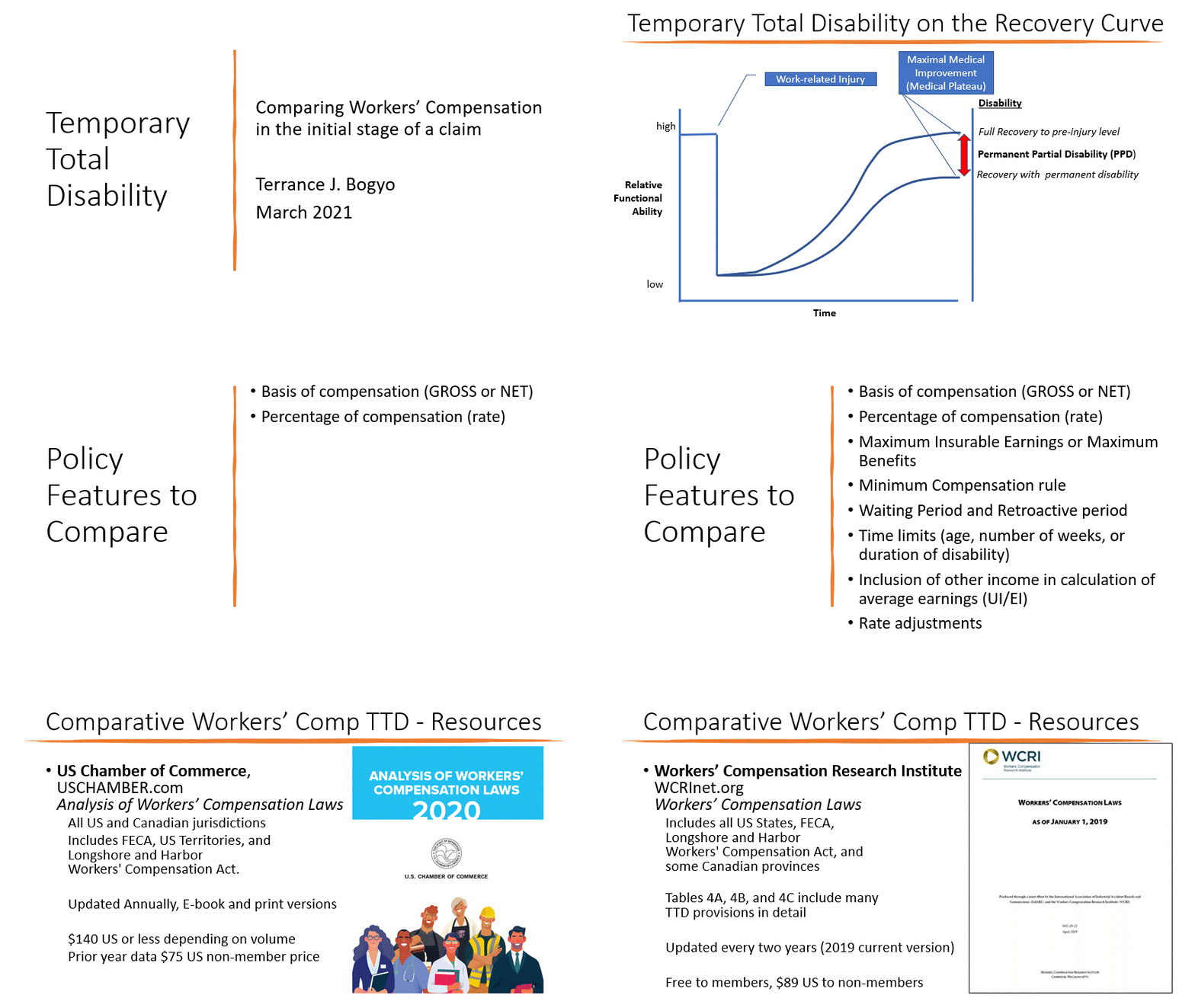
 Work-related injury not only physical and mental pain, but any resulting disability also raises immediate questions Injured workers and family members often turn to their human resource (HR) and disability management (DM) professionals to provide guidance on workers’ compensation issues.  For the HR or DM professional with clientele in more than one jurisdiction, providing that guidance and setting expectations can be more complicated. The policy alternatives used by other jurisdictions can also inform discussions on workers’ compensation reforms. 


Virtually all workers’ compensation claims involving time away from work are subject to specific provisions for the initial phase of a claim.  For the more than 70% of nonfatal occupational injury or disease cases that involve 30 days or less away from work, the laws and policies governing Temporary Total Disability (TTD) are the only provisions that will determine their compensation for lost wages.   Canadian data is similar with more than 77% of  wage-loss claims off wage-loss benefits at 90 days [AWCBC Key Performance Measure 25.3, Canada, 2017].


[For more on the distribution of days-away-from work for work injuries, see Bureau of Labor Statistics, Table R65: Number of nonfatal occupational injuries and illnesses involving days away from work by days away from work groups and median number of days away from work by industry, (All industry, private industry data) retrieved from   https://www.bls.gov/iif/oshwc/osh/case/cd_r65_2019.htm modified Nov 4,2020]


I get a lot of questions from students and researchers on how workers’ compensation jurisdictions differ in their compensation for the initial period following an injury.  Here are the most common questions and a brief response for each.  In the accompanying slides and in some responses, I provide additional references as a starting point for understanding and comparing initial workers’ compensation.


All workers’ compensation systems pay the same rate for lost wages…right?


No.  How much workers’ compensation a worker receives depends as much on where you claim workers’ compensation as on how much you earn.  If you live in Arizona, you will be entitled to 66 2/3% of GROSS average weekly wages during the initial period of disability, often referred to as Temporary Total Disability (TTD).  In Alberta, the compensation rate is based on 90% of NET.  In the Yukon, the rate is 75% of GROSS while Iowa compensates on an 80% of SPENDABLE earnings (essentially the same as NET).  [Note:  Washington state’s compensation rate varies from 60% to 75% of gross depending on marital status and number of dependent children].


The rate of workers’ compensation stays the same for the duration of TTD in almost every jurisdiction.  In Nova Scotia, however, the initial rate increases from 75% of NET to 85% of NET at 26 weeks following the date of injury.   


Is there a waiting period in every jurisdiction?


No. In Canada, most provinces do not have a waiting period.  New Brunswick has a one-day waiting period but will be eliminating that as of July 1, 2021 leaving Nova Scotia as the only workers’ compensation jurisdiction with a waiting period (two- fifths (2/5) of normal work week). 


In the US, most states have a waiting period but just how big a waiting period varies from three (e.g., California) to seven days (e.g., Indiana).  Most jurisdictions also have a “retroactive period”, a number of days away from work after which the waiting period is reimbursed.  In New Brunswick, that retroactive period is 20 days while in California, its 14 days and in Alaska 28 days.  In a few jurisdictions, the waiting period is not reimbursed (Hawaii, for example). 


Are there any maximum compensation amounts for TTD?


Most jurisdictions have some sort of maximum on the insured earnings or the weekly benefit; the amounts vary widely. [Note:  a maximum on insured earnings creates a maximum benefit that can be expressed on a weekly basis; conversely, a weekly maximum benefit reflects an implicit maximum insurable earnings limit].  


I could find only one jurisdiction with no maximum on insured earnings:  Manitoba.  Alberta had no maximum from September 2018 until December 2020 but set an annual insurable earnings level at $98,700 for 2021; applying the 90% of NET compensation rate, that works out to a maximum weekly benefit of $1250.83. 


In the US, the average maximum weekly benefit is almost exactly $1000.  For the same year, Canada’s average maximum weekly benefit works out to a little less at $1157.50, however, that estimate excludes Manitoba (because it has no maximum).   [2019 data from US Chamber of Commerce, 2019 Analysis of Workers’ Compensation Laws; Canadian data, AWCBC webpage, “Temporary Total Disability Compensation” as of Feb 12, 2021 available at https://awcbc.org/en/summary-tables/benefits-and-rehabilitation/workers-compensation-temporary-total-disability-compensation/ ].  


Is there a minimum compensation amount for TTD?


There is no statutory or regulatory minimum amount of workers’ compensation payable for temporary total disability in most jurisdictions; the amount of compensation for all wage earners is calculated on the percentage of GROSS or NET. This is particularly hard on low wage earners in jurisdictions using GROSS as the basis of compensation. 


Taxation rates are generally “progressive”, in that higher earners are subject to a greater taxation rate than low wage earners.  At lower income levels, no income tax may be payable.  At these levels, a compensation rate of 66 2/3% or 75%  of GROSS effectively cuts spendable income by a quarter to a third.  Workers at the lowest income levels are likely to have the least reserves to make up for any shortfall.  To guard against this, jurisdictions like British Columbia include a minimum compensation provision such as the following:

Earnings between $22,300 and $27,800

If your gross annual earnings are above statutory minimum, but 90% of the average net earnings falls below the statutory minimum of $22,230.72 (or $426.34 weekly), you will receive the statutory minimum.

Earnings below minimum

If your rounded-up gross annualized earnings are below the minimum of $22,230.72 (or $426.34 weekly), you will receive 100% gross average earnings. For example, if your gross average earnings are $280 per week (equating to $14,560 annually), you will receive from us $280 for each week of wage loss.

[ WorkSafeBC, 2021 Net Compensation Table available at https://www.worksafebc.com/en/resources/claims/guides/2021-net-compensation-table?lang=en ]


Once a compensation rate is established, does it remain the same for the initial period of TTD?


Generally, yes but there are some exceptions and provisions for review and adjustment.  The basic idea of TTD compensation is to reflect actual loss of earnings immediately following an injury.  Many jurisdictions have policy provisions to accommodate “actual loss”.  These provisions tend to help workers with irregular work schedules to receive fair compensation for the real loss of earnings resulting from a work-related injury.  Think of a health care worker working three 12-hour shifts followed by two days off; payments based on average daily or weekly earnings may not adequately compensate for earnings lost over a short period of disability. 


A more obvious issues relates to the definition of any “initial period” of TTD.  Many workers’ compensation laws provide for a review of the level of compensation at some point with eight-, ten-, or thirteen- week reviews being common. If the idea is to reflect loss, then the assumption is that losses in the first number of weeks are best reflected by examining the earnings at the time of injury and extrapolating forward.  Earnings “at the time of injury” may be defined as specifically as four pay periods prior to injury (as in Newfoundland & Labrador) or as generally as the average “that best reflects the worker’s actual loss of earnings” (Manitoba). 


As the duration of temporary disability becomes extended, that assumption may need to be revisited.  Beyond whatever review point is chosen, the compensation should reflect the longer-term earnings history and, therefore, the longer term presumed earnings loss due to injury.  Many jurisdictions have procedures for establishing long-term average earnings for the purposes of continues TTD, permanent disability, or economic-loss awards. 


How long is “Temporary”?


Workers’ compensation for Temporary Total Disability generally last for the duration of disability or to the point of maximal medical improvement.  Disability should not be confused with impairment.  Most workers return to work well before reaching maximal medical improvement.  Many can and do work with impairments.  Others may be accommodated or resume work duties with modifications or adaptive devices while still temporarily or permanently impaired.  Workers’ compensation for TTD ends when a worker has (or can) safely return to partial or full duties.  In the case of partial disability, Temporary Partial Disability (TPD) compensation may be paid.   [See graphic in accompanying slide presentation]


There are cases where temporary total disability may be prolonged.  Some jurisdictions limit the duration.  In Florida, that limit is 104 weeks while in Indiana, the limit is 500 weeks; Massachusetts has a 156 week limit and Utah has a 312 week limit.  In Canada, the duration of TTD is often limited by age.  In several provinces, TTD benefits for those over a certain age are limited, effectively limiting TTD compensation to two (or four years in Quebec) after injury.  Age 65, 68 or pre-established retirement age are also considered as possible limits to the payment of TTD. 


Are collateral benefits allowed?


The answer to this question varies but a general insurance principle applies.  Insurance is intended to compensate for loss.  Injured workers suffering a temporary total disability should not be compensated to greater than 100% of their lost earnings for a work-related injury.  Workers’ compensation is the  “first payer” so other insurers will want to make sure any workers’ compensation entitlement is paid first.  For this reason, most group short and long-term disability insurance plans will not allow “stacking” of benefits.  In most cases, the effective rate paid by workers’ compensation, given the tax-free status of TTD benefits, will exceed taxable group disability plans provided in whole or in part by an employer.   Certain group disability plans are completely worker funded and may not be taxable.  These plans often provide a lower benefit rate. 


There may be some integration or offset of workers’ compensation in certain cases.  Earnings paid by employers during the period of TTD (sometimes referred to as “top-ups”) may be deducted from workers’ compensation benefits.  In Manitoba, there are specific provision and limits regarding collateral benefits that may result in their full deduction from workers’ compensation entitlements. 


In general, personal or private individual disability plans and disability insurance on personal loans and mortgages are ignored by workers’ compensation but there may be provisions in these plans that take into account workers’ compensation.   Each plan should be examined on its own. 


Are unemployment insurance payments considered earnings?


Most jurisdiction ignore unemployment insurance, but a few workers’ compensation systems will include unemployment insurance (Employment Insurance or EI in Canada) in the calculation of average earnings (for example, Prince Edward Island includes employment insurance; Nova Scotia does not).  In some sectors, this income provides a regular part of earnings and is essential to maintaining a particular workforce in certain sectors.  Check each jurisdiction to be sure.


What about secondary employment?


Between four and ten percent of workers are multi-job holders, deriving income from more than one employment source.  The extent to which earnings loss from secondary employment is covered by workers’ compensation varies.  I cover this in previous blog posts.  Whether you call it secondary employment, moonlighting, or a side-gig, earnings lost due to injury may be covered in the initial stages of a claim. 


Why are the differences in TTD important?


Context matters.   Without understanding how benefits are structured and paid, it is difficult to properly assess relative costs and values of workers’ compensation or any other insurance.  For example, comparing the cost of fire insurance for you home needs to take into account more than the price; differences in the deductible provision, for example, can be a factor accounting for the premium cost differential.


Where can I get comparative data on TTD?

The features of individual workers’ compensation laws and policies are unique to each jurisdiction.  Only a direct comparison from the actual law, policy and jurisprudence can provide a detailed analysis.  That said, there are several credible research reports that provide useful summary information in a comparable format.  I’ve included a brief presentation that highlights four sources, some of which provide free public access.  Some sources may be available through member organizations or libraries. 


Association of Workers’ Compensation Boards of Canada, AWCBC.org,  
Workers’ Compensation – Temporary Total Disability Compensation


US Chamber of Commerce,  USCHAMBER.com, Analysis of Workers’ Compensation Laws


National Academy of Social Insurance, NASI.org, Workers’ Compensation: Benefits, Costs, and Coverage


Workers’ Compensation Research Institute, WCRInet.org, Workers’ Compensation Laws