Showing posts with label prevention strategy. Show all posts

Sunday, January 29, 2023

How do we make Workers’ Compensation organizations better?


The pandemic disrupted the operations and planning of many workers’ compensation organizations (WCO).  Researching and planning had to shift from strategic initiatives to tactical priorities of protecting staff and serving the workers and employers reliant on workers’ compensation.  As we transition to the post-pandemic era, planning for the longer term must gain in priority. 


The international consulting firm, Deloitte, published a study on the future of workers’ compensation organizations in 2020, just as the COVID-19 crisis was impacting services across the sector.  The timing of its release meant that many policy makers, boards of directors, and planners may have missed the analysis.  A link to the study at the end of this post.


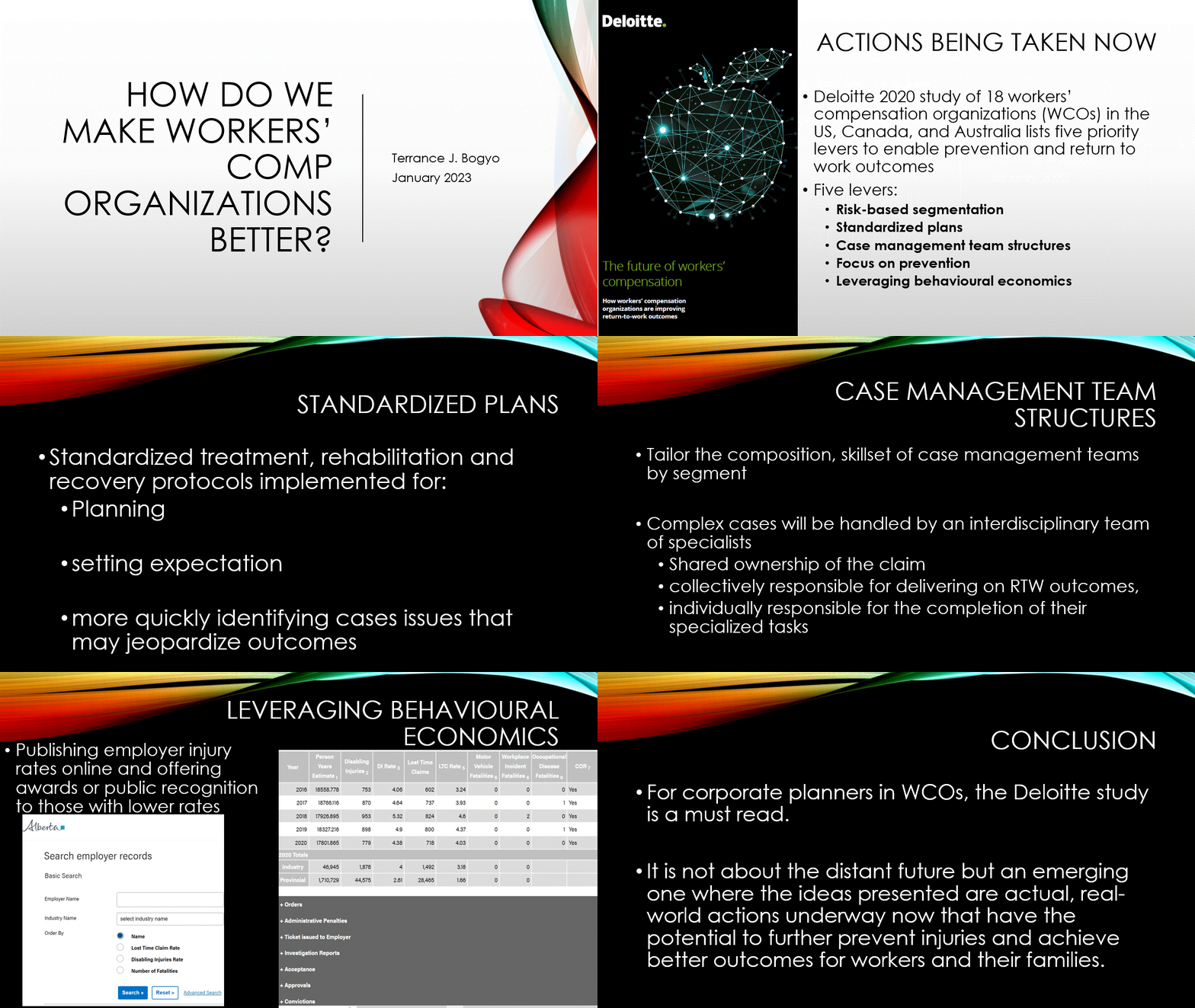
The study is based on surveys of 18 workers compensation organizations in the US, Canada, and Australia.  It identifies five “levers” that workers’ compensation organization can use to shape the future of service delivery and outcomes.  The five levers are:

  • Risk-based segmentation
  • Standardized plans
  • Case management team structures
  • Focus on prevention
  • Leveraging behavioural economics


The study focuses the work and structure of WCOs on return to work (RTW) and recovery.   For many WCOs, this means a functional shift from internal processes focus of claims inventory management to better outcomes for workers in terms of health, safety, recover, and RTW. 


Risk-based Segmentation:


The majority of workplace injuries result in little or no time away from work.  Workers are often back on the job before a claim is fully established.  Identifying these cases as low risk in terms of difficulty in recovery, rehabilitation and return-to-work can streamline operations, improve customer service and focus resources where they are most needed. 


Many organizations are adopting “auto-adjudication” methods for more routine cases.  What is often missing from the system is segmentation based on the risk of failing to return to work or the difficulty of returning to work.  The study suggests that up to 80% of cases may be handled fully or mostly by automated systems.  This meets service expectations of injured workers wanting timely decision-making and payment of claims.  It also frees resources to focus on more complex cases including, shoulder, back, traumatic stress, occupational cancers, and fatalities. This is not just Pareto principle, example, but a practical imperative.


Organizations that stream or triage cases into specialty areas from the start of the claim are already well on their way towards fully risk-based segmentation.  I have seen specialty units set up for hand injuries where treatments are arranged and commenced before the claim is fully adjudicated and accepted.  Some agencies have experimented with sensitive and mental injury claims groups to adjudicate and case manage injuries related to harassment, assault and stress—claims with a high risk of lengthy recovery, recurrent disability, and difficulty in sustained, safe return to work.  Risk-based segmentation has the potential to make workers’ compensation organizations more efficient and better at optimizing worker outcomes.


Standardized plans:


The Deloitte study emphasizes the use of standardized plans.  This strategy follows from segmentation and takes different forms in different workers’ compensation organizations.  Case managers, treating physicians, and therapists can use standardized treatment, rehabilitation and recovery protocols as the basis for planning, setting expectation, and more quickly identifying cases issues that may jeopardize outcomes. 


Standardized treatment plans are not cookie cutters but starting points for taking those medium and higher complexity cases toward the objective of RTW and recovery.  These are not the old medical yardstick tools of the past.  Treatment and rehabilitation guidelines (See as an example, WorkSafeBC, Ankle Ligament Reconstruction Post-op Rehabilitation Guidelines,  available at https://www.worksafebc.com/en/resources/health-care-providers/guides/ankle-ligament-reconstruction ) provide the worker, case manager, and treating professionals with common understanding, expectations,  and roadmaps to RTW and recovery.  This standardization does not obviate the need for customization and active case management but does lead to consistent treatment, fewer delays and ultimately better outcomes.   Besides the transparency and predictability standardized plans offer, they also allow greater time for providing support to workers and their families.


Case management team structures


Having effectively and accurately segmented cases and standardized plans, WCO structures and systems need to be aligned to manage cases.  Injured workers with medium to high complexity injuries complain about case manager lack of understanding of their injury, constant hand-offs, and “churn” in personnel.  Injured workers often ask me, “Should it be up to me to training my case manager?” and “Why do I get someone new every time I call?.  They hear about a “team” approach but are never told what that means.  Rarely is the team members identified by name and responsibility.   


It is not just about structure.  It is about training and specialization that can implement the best practices of RTW consistently.  Mental health teams, for example, can be very effective if the teams have the deep understanding that comes with training and experience, often within a specific sector (particularly law enforcement, paramedical services, and healthcare).


Structures need foundations.  The infrastructure to support case management in the future WCO will not be the same as it was in the past.  Analytics and artificial intelligence will facilitate timely actions and flag cases where interventions are necessary.  This is not just about following schedules but integrating information to overcome barriers to RTW or impediments to recovery so they can be acted upon in a timely way.  Ontario’s WSIB, for example, offers the following “Specialty Programs” to:


…provide timely access to expert specialists for people with work-related injuries or illnesses. These programs specialize in recovery and achieving a healthy and safe return to work by conducting an assessment and providing interdisciplinary treatment for more complex injuries and illnesses.

(see WSIB, Specialty Programs, available at https://www.wsib.ca/en/specialtyprograms)


Focus on prevention!


Some seek to limit the concept of “prevention” of injury but a more inclusive definition that embraces the prevention of disability is needed.  This is not as clear in the Deloitte study as it should be.  While there is a nod to changes in terminology away from “injury management”  to language and practices consistent with recovery and return to work.


As the Deloitte study points out, the prevention mandate varies widely across WCOs.  About half the Canadian jurisdictions and a few jurisdictions in the US and Australia, the legislative mandate for  occupational health and safety including prevention is embodied in the workers’ compensation legislation or authority.   


Regardless of mandate, the study asserts,  “prevention efforts can support all WCOs in realizing sustained reductions in claims volumes and costs, higher safety literacy rates, and communal ownership of prevention.”  [p.15] 


WCOs can act directly within their mandates.  According to the survey, WCOs are now leveraging a focus on prevention to reduce injuries and prevent through”

  • Periodic workplace safety audits are conducted (50%)
  • Employer rating/pricing is tied into their implementation of health and safety programs (56%)
  • Work with employers to create customized safety programs for them (61%)
  • Employers are offered a menu of safety programs that they may implement and adopt as needed (61%)


The Deloitte study flags strategies that focus on cultural change within the workforce, third party collaborations to enable safety and prevention in the workplace and data analytics to support workers and employers in preventing injuries before they occur.  A prime strategy is to focus on industry and partner with employers, industry groups and labour organizations.  Dedicated departments focused on prevention initiatives with the personnel and budgets to initiate, sustain and expand preventions efforts are essential.

Examples such as the collaborative cultural change efforts include


Collaborative initiatives targeting segments of high risk, high complexity at their route are essential to effectiveness of this lever.  WCOs through collaborations and initiatives can bring predictive analytics, the latest research, retrospective data analysis and resources to bear on issues to prevent injury and disability as with  BC First Responders’ Mental Health (see http://conference.bcfirstrespondersmentalhealth.com/).


Leveraging behavioural economics


WCOs are learning to reach beyond the traditional disciplines of insurance and enforcement in finding ways to achieve a future state.  The Deloitte study highlights the power and potential of behaviour economics to better understand and influence the way people behave.  


WCOs have employer performance data on injuries, fatalities, inspections, and penalties that are too often hidden from the public, workers, and other employers. Overcoming the organizational inertia or limits of the WCO mandate is essential to bringing about this future state.


One of the  “future” behavioural economic approaches highlighted include publishing employer injury rates online.  A great example of this already exists in Alberta.  With the entry of an employer name, results covering up to five years of data are instantly available.  The data are rich and include person year estimates, disabling injuries, lost-time claims, workplace incident fatalities, occupational disease fatalities and much more.  Injury rates for the firm and the overall industry add to the context.  The database includes summaries of occupational health and safety orders, administrative penalties, and even convictions.  [See https://extern.labour.alberta.ca/ohs-employer-search/occupational-health-safety/employer-records-search.asp] .


The study also highlights research out of New South Wales that used behavioural economics:   

…to personalize support for workers and encourage them to actively participate in the recovery process. Practices included reducing the volume and detail of communications, reframing messaging to focus on recovery and RTW rather than on injuries, and having case managers provide more personalized support that was targeted to workers as individuals. [p 18]
 

 Closing comments


For corporate planners in WCOs, the Deloitte study is a must read.  It is not about the distant future but an emerging one where the ideas presented are actual, real world actions underway that have the potential to further prevent injuries and achieve better outcomes for workers and their families. 


The study “The future of workers’ compensation - How workers’ compensation organizations are improving return-to-work outcomes” is available at:  https://www2.deloitte.com/ca/en/pages/financial-services/articles/the-future-of-workers-compensation.html

Saturday, November 14, 2020

What keeps workers safe from COVID-19?


Workplaces address  COVID-19 infection risks by highlighting the hazards and implementing a hierarchy of controls.   Observing the strategies and tactics workplaces are actually using  can provide valuable insights and examples.


Science informs workplace safety and health.  Proven measures in the fight against COVID-19 include: physical distancing,

  • frequent hand washing,
  • not touching your face,
  • wearing a mask,
  • avoiding crowds, and
  • sticking to your immediate “bubble”.


The point of these measures is to keep concentrations of virus out of your airways where the disease takes hold.  


Everyone wants this COVID-19 infection threat to go away.   Until this hazard is eliminated, employers are required (by occupational safety and health authorities, public health orders, and the moral imperative) to protect workers and other persons in the workplace.  In the context of the COVID-19 pandemic, that means active measures to eliminate the workplace hazard or mitigate exposure and infection risk.


The Common Objective

Workplaces share a common objective in this pandemic: 

Prevent workers from contracting COVID-19 virus. 


Workers and other persons in the workplace are at increased risk when they occupy the same workspace, are in close proximity to others, or have contact with contaminated surfaces. 


“Close proximity” is a general term and not the same as the “close contact” term used by public health officials.  Just because you have been in close proximity to others does not make you a “close contact”.


Health Canada, for example, defines close contact for COVID-19 this way:

Close contact: Breathing in someone's respiratory droplets after they cough, sneeze, laugh or sing. [see Health Canada, Coronavirus disease (COVID-19): Prevention and risk] 

For contact-tracing purposes, the CDC uses the following definition of close contacts:

Someone who was within 6 feet of an infected person for a cumulative total of 15 minutes or more over a 24-hour period starting from 2 days before illness onset (or, for asymptomatic patients, 2 days prior to test specimen collection) until the time the patient is isolated. [See CDC, Contact Tracing Plan, Appendix A]


Close-proximity encounters may not meet the formal definition of “Close-contact” but being near enough to someone to potentially breath in their respiratory droplets does create a pathway for transmission.  Interrupting those transmission pathways is the priority. 


From research, experience, and incident investigations, we know this virus is most often transferred person-to-person by respiratory droplets (generated when we speak, sneeze, cough, sing, shout, laugh or talk); surface-to-person transfer of the virus occurs to a lesser degree and effectively controlled with sanitation and hygiene. Reported contact-tracing results have focused on person-to-person chains of transmission as the most common pathway.  Most workplace COVID-19 safety plan strategies and tactics are focused on this priority.   


Common Strategies

Workplaces are following eight main observed strategies:

       Keep workers FAR from hazard

       Distance workers and others from each other

       Reduce potential viral presence in workspace

       Eliminate close spatial contact

       Stop droplet exposure risk (non-medical settings)

       Stop droplet and viral particle transmission (medical and similar settings)

       Control close-proximity encounters

       Actively limit chains of transmission


This is not an exhaustive list and few organizations rely on just one strategy.  That said, each strategy has its own rationale, and each workplace develops or selects tactics that work best for that workplace. 


Observing the tactics—and how well they are implemented—illustrates what can be done to minimize workplace risks amid this pandemic. 


Strategy 1:  Keep workers FAR from hazard

If you live alone on an island, you have no direct risk of exposure to the virus.  Life is generally not like that; however, creating islands or “bubbles” that keep occupants far from the virus is a valid strategy that has been implemented with some success.


Work-from-home policies are now commonplace.  Working and living in your own bubble far away from potential sources of infection works well.  The recent National Hockey League (NHL) and National Basketball Association (NBA) playoffs demonstrated that large bubbles can also work.  On a smaller scale, the Villanova Nursing home is a great illustration of how bubbles in the healthcare sector.


The Vilanova nursing home - How workers and staff avoided the first wave

As the first wave of the virus swept across Europe, a nursing home in France locked down.  Over the next 47 days, 29 of the staff of 50 stayed with the residents day and night, sleeping on mattresses on the floor.  Other staff who came from the outside to assist were kept separate from the sequestered staff and residents; they also wore PPE.  In the beginning, residents were confined to their rooms while staff did a deep clean of the facility.  After that, the staff and residents mixed freely, maintaining morale and the mental health of all concerned.  [See The Associated Press, “How a nursing home in France stopped coronavirus from killing elderly in its care”, May 04, 2020 available at https://www.cbc.ca/news/world/france-vilanova-nursing-home-1.5554296 ]


Broken Bubbles:  The Melbourne Outbreak

Bubbles can work both ways:  to keep uninfected people in and to keep infected people from contacting others. Victoria, Australia is currently experiencing a second wave centred in and around Melbourne, the state’s largest city.  Beginning in May 2020, foreign visitors were required to quarantine in specific hotels for two weeks.  The mandatory quarantine was enforced by contracted private security guards.  The bubble in this case was for quarantined individuals. Within weeks, COVID-19 had spread in these locations among guests and the staff and guards charged with maintaining the quarantine.  Gene sequencing of the virus that has now spread widely in the state traces the origin back to the quarantine hotels.  The exact exposures that resulted in infection have not been formally reported but lack of training, lack of PPE, inadequate hygiene, breaches in protocols have been mentioned as probable contributing factors.  The premier of the state cited the sharing of a lighter among security guards and certain “carpooling” arrangements as examples that contributed to the outbreak, although more fundamental issues such as work insecurity and lack of clear lines of responsibility likely contributed.  [See   Ben Schneiders, “How hotel quarantine let COVID-19 out of the bag in Victoria,” The Age, July 3, 2020 at https://www.theage.com.au/national/victoria/how-hotel-quarantine-let-covid-19-out-of-the-bag-in-victoria-20200703-p558og.html]. 


[Note:  Australia clamped down hard on this outbreak.  As of this writing, no or very few positive COVID-19 tests are being recorded]


Like all the strategies for keeping workers safe, success is dependent on how well the supporting tactics are implemented and maintained. Maintaining bubbles is hard.  Staying home or working from home is hard.  Necessities such as groceries and medical attention may be sought remotely; realistically, most of us need to physically leave our homes for many purposes. Each time the bubble is breached, the risk of infection goes up.  That applies to everyone in the bubble.  Keeping bubbles small makes them more manageable but each time anyone in the bubble interacts outside the bubble, everyone in the bubble has increased risk.


Working-from-home policies do not fully insulate employers from workers’ compensation liability.  Work-related risks may still exist for every worker carrying out work, including COVID-19 infection risks and other risks associated with working from home, (e.g., workers’ compensation claim  by a worker who was injured while carrying personally acquired office furniture upstairs at home for employer approved work-from-home setup was allowed [State of New York Supreme Court, Appellate Division, Third Judicial Department,  530530, October 22, 2020].  Each time I open the door to sign for a courier delivery or leave my home to get work supplies, I am also opening the door to an interaction that carries risk.


Strategy 2:  Distance workers and others from each other

Keeping workers far from the virus is not a practical strategy for many workplaces.  Despite voluntary and ordered closures in many communities, enterprises deemed “essential” have remained open. Fire fighters, healthcare workers and police officers are universally accepted as essential. In my community, the list of essential businesses includes local hardware, drug, and grocery stores.  Many non-essential businesses including construction and retail have continued to operate during the pandemic (albeit with some restrictions). 


The main strategy implemented to keep workers safe in these environments are designed to distance staff and patrons.  In the local hardware store, the counters were widened overnight with improvised plywood sheets to ensure patrons and service staff had a six-foot or two-meter distance between them.  Monitors were in place at the grocery store to ensure capacity never exceeded the allowed set number.  Tape on sidewalks and markers on floors guided customers to maintain distances.  Directional arrows ensured aisles would not become congested (at least not with people facing each other and forced to pass within the required distance). 


Capacity limits may be mandated by public health.  Many restaurants and retail spaces are small and capacity limits are needed to allow for spacing between staff and patrons. 


Again, this strategy and associated tactics require active monitoring to be effective.  Coupled with other strategies and tactics, the risk of infection can be reduced.  The more space between workplace participants, the greater the protective effect.


Strategy 3:  Reduce potential virus presence in the workspace

Even with distancing methods in place, staff and other persons in the workplace may still be infected with Covid-19 and shedding the virus (often unknowingly while asymptomatic or pre-symptomatic). One observed tactic now in many workplaces is the presence (or increased presence) of sanitation stations.  At one roadside construction site, I saw a sink had been installed to a fire hydrant so workers could wash with soap and water more readily.  Several retailers have put hand-sanitizing stations throughout their stores.  The number of staff performing spot cleaning and sanitation duties is observably higher than ever.  In several large retailers, frequent public address system announcements to staff direct them to specific tasks like sanitizing their workstations or breaking to wash their hands.


The added costs of these measures are minor compared to the costs of lockdowns.  When outbreaks do occur, “deep cleaning” and sanitation of the workplace are implemented to further reduce the potential for any further infection even if surfaces were not the obvious or immediately identified source of infection.  In our community, the few incidents observed have resulted in short closures and a resumption of activities within a day. 


Visible signs of increased sanitation efforts and well stocked sanitation stations for customers certainly increases my willingness to visit certain businesses during the pandemic. That said, this strategy focuses on things, not people; it only works with other preventative efforts including distancing. 


Strategy 4:  Eliminate close spatial contact

Wider counters and capacity control tactics can distance workers from others in the workplace but much of service, sales and administration involves in-person contact.  A key strategy is to reduce the close spatial “pinch points” and hand-offs that are often required.  Home delivery and curbside pickup are common tactics that has been implemented to eliminate spatial contact.  Orders are placed online or over the phone and payment pre-arranged; patrons arrive and pick up orders already at or orders are delivered to the curb or doorstep. Restaurants, office supply houses, and petfood stores are among the stores in my neighborhood who have implemented these tactics. 


Our local library has implemented another similar tactic: choreography.  each patron approaches an outside window and holds their library card to the glass; a staff member scans the barcode from inside the library, retrieves the books and DVDs requested online.  Next, the patron steps back and the staff member places the order outside the door on a table then returns inside, allowing the patron to then come forward to retrieve the items being loaned.  This dance may be inefficient in terms of time but completely effective in eliminating close spatial contact. By the way, the staff member (wearing mask and face shield and sitting behind plexiglass) manning the door also asks each patron wanting to enter the library a set of COVID-19 questions, ensures mask use, and directs hand sanitization upon entry to the library.     


Eliminating close spatial contact works well for transactional operations.  When UPS recently delivered our new tablet, they skipped the signature requirement in order to eliminate the close spatial contact needed to sign the electronic delivery tracker.   Process design changes like these are likely to continue.  There may be some loss of service opportunities, queuing issues and time efficiencies of in-person close spatial contacts as a result of these tactics.


Strategy 5: Stop droplet exposure risk (non-medical settings)

The Covid-19 virus is primarily spread in respiratory droplets.  Well-fitting, non-surgical masks covering mouth and nose have been proven to reduce droplet transmission from the wearer and there is some evidence that they limit droplets from being inhaled by the wearer.  [see, “Scientific Brief: Community Use of Cloth Masks to Control the Spread of SARS-CoV-2”, CDC, Updated Nov. 10, 2020].


Facial shields prevent droplet splashes or projections from a cough or sneeze from reaching the wearer’s face (eyes, nose and mouth in particular).  Plexiglass and suspended plastic shields have a similar effect, and their height and width add distance between the point of droplet generation and possible exposure.  This does not remove the risk entirely. 


We know indoor spaces and spaces with poor ventilation allow droplets to travel further and remain afloat in the air longer than in outdoor spaces.  Increasing the ventilation by opening a window or changing external air mix in HVAC systems may be options (although more costly particularly in the winter season).  The US Environmental Protection Agency notes:


By themselves, portable air cleaners and HVAC filters are not enough to protect people from the virus that causes COVID-19. When used along with other best practices recommended by CDC and others, filtration can be part of a plan to protect people indoors. [see Air Cleaners, HVAC Filters, and Coronavirus (COVID-19), EPA webpage]


Tactics that rely on physical barriers degrade communications often required between workers or workers and others in the workplace.  In my community, I have seen both customers and employees bypass the barrier and work around the edge to speak with each other, thus defeating the purpose of the barrier.   


Again, this strategy does not work on its own.  Sanitation of barriers, capacity limits, and other measures are important. 


Strategy 6: Stop droplet and particle exposure risk (medical and similar settings)

Testing for Covid-19, transporting patients with the virus, and caring for them in hospitals and intensive care units are obvious examples of situations with elevated risk of infection.  In an environment with high potential for viral infection, more protections are needed.  Nurses, respiratory technicians, physicians, cleaners, and care aides put themselves in these high hazard environments every day. 


In a sea of known COVID-19 virus, stopping droplets and particles is hard.  The PPE, safe work procedures, supervision and training are among the most effective safeguards, barriers and defenses for keeping healthcare workers safe.  It is not just an N95 mask or a facial shield that achieves the objective; protection is achieved by multiple layers.  Each layer of protection has value but is not perfect. James Reason’s classic “Swiss Cheese” model provides an accessible, memorable metaphor for understanding how multiple layers work.  Active and latent defects occur in every barrier, but the multiple layers reduce the probability of these gaps aligning in such a way as to allow the virus to infect the worker. 


Just because there is a pandemic doesn’t mean that the rest of life stops.  People need blood tests, dental work, physiotherapy, and a range of medical and similar services that can only be given in close-contact care.  The risk in each situation must be assessed.  In many cases, several items of PPE may be required.  Achieving a safe work situation requires more than the provision of PPE.  The right PPE, supervision, training and safe work procedures are essential in these medical and similar workplaces.


The CDC includes consideration of increased ventilation and filtration in its guidelines for healthcare:

Optimize air-handling systems (ensuring appropriate directionality, filtration, exchange rate, proper installation, and up to date maintenance)....Consider the addition of portable solutions (e.g., portable HEPA filtration units) to augment air quality in areas when permanent air-handling systems are not a feasible option.

[Interim Infection Prevention and Control Recommendations for Healthcare Personnel During the Coronavirus Disease 2019 (COVID-19) Pandemic, CDC Updated July 15, 2020].


This strategy, like the others, has its limits.  It cannot stop workers from being exposed outside the work environment.  Reported cases of workers infecting each other in breakrooms and social events among their peers illustrate some of these risks. 


Strategy 7: Control close-proximity encounters

Close-proximity encounters with customers and co-workers are often unavoidable.  Passing people in a corridor, cooperating in a lift of a heavy object, or handing a receipt to customer involves close- proximity interactions.   Most such interactions are fleeting; risk increases with increased duration and closer positioning. 


Despite rules, procedures, and efforts to prevent them, close-proximity situations arise.  This is particularly true in manufacturing, construction, fabrication, personal services, and processing tasks where multiple workers must work closely for periods of time. 


After considering and implementing PPE and procedures, some companies are implementing technologies to help lessen the number and duration of close-proximity contacts.  Proximity sensors and apps on cellphones can alert workers when they are in close proximity to others.  Several sensors are in the form of wearable disks or tokens that provide light and/or sound cues when workers are within defined distances.  Enhanced versions can also track the identities of the participants and even their locations during encounters—factors that could be useful should the need for contact tracing arise. 


Several token-based products are directed more at industrial applications such as food processing and equipment manufacturing.  Safeteams technology implementation requires each employee to be issued a wearable fob.  The fob emits a light cue if a worker is near another worker.  “Beacons” installed in the workplace periodically communicate via Bluetooth allowing for mapping and contact tracing.   [See Mary George, Contact Tracing, Social Distancing Monitoring, and Other Technologies for Keeping Workers Safe, Food Industry Executive, 22 July 2020 at https://foodindustryexecutive.com/2020/07/contact-tracing-social-distancing-monitoring-and-other-technologies-for-keeping-workers-safe/ ]


Again, tokens or other monitors (including human observers) are not a complete solution.  A sensor chip is into a shield.  Like any protection, it has its limitations including how well users actually attend to the warnings emitted.  Other strategies and tactics including active supervision to ensure safe work procedures are followed are needed.   


Strategy 8: Actively limit chains of transmission

This strategy relies on frequent, wide or universal testing within the workplace, rapid results and rapid, thorough contact tracing with effective support for quarantine and isolation. Quickly identifying a workplace exposure to Covid-19 and stopping the transmission of the virus in a workplace is essential to safe work.  Procedures for rapid reporting and contact tracing within workplaces are essential to limiting chains of transmission.


This strategy is particularly applicable in natural resource and construction camps where accommodations are often closely spaced and food services are provided en masse.  Camps often operate in a sort of bubble but with rotating members.  The possibility of an infected worker entering the camp and unknowing spreading the virus puts all personnel at risk. 


To better manage this risk, New Gold Mining in Northern Ontario is now testing every employee for COVID-19.  New Gold has 150 workers in 14 day rotations entering the camp.  The company uses Precision Biomonitoring test kits at its River operations.  The battery-operated analysis device is about the size of a toaster and contains the necessary reagents and technology to analyze nine samples at a time and deliver results to a smartphone app in about an hour. Rapid identification of anyone carrying the virus allows containment of virus and protect other workers.  [see Sarah Bridge, Ioanna Roumeliotis, “Ontario mining company 1st to try new mobile test that diagnoses COVID-19 in as little as an hour,” CBC News, 11 August 2020 available at https://www.cbc.ca/news/canada/rapid-onsite-covid-test-1.5680526 ]


Rapid testing with rapid results is essential to limiting chains of transmission in the community.  That is why many jurisdictions place such an emphasis on contact tracing.  While smartphone-based contact-tracing apps are being implemented in many countries and some firms, not everyone has a cellphone and many who do have older ones that may not be compatible with the contact tracing app. 


Singapore was among the first to roll out a contact tracing app but privacy concerns and low uptake from the general population limited its use. Although migrant workers were required to download the app, large gaps in coverage made the app less effective.  Now Singapore is handing out small TraceTogether “tokens” to those without phones or reluctant to use GPS based technologies.  The battery-operated token is worn or carried in a purse or pocket.  It interacts with other tokens and smartphones with the enabled TraceTogether app.  In the event of a positive COVID-19 test result, the token can be turned over to public health contact tracers.  Close-proximity Bluetooth contacts over the previous 25 days stored on the device facilitate contact tracing.  [See Saira Asher, “Coronavirus: Why Singapore turned to wearable contact-tracing tech”, BBC Singapore, 5 July 2020 at https://www.bbc.com/news/technology-53146360 ]


Testing poses lots of questions: who to test, how often, how quickly can results be obtained, how reliable are the results, how are results communicated and to whom… Equally important is what happens next.  Without rapid isolation of positive cases and quarantine of close contacts, testing does not effectively break the chains of transmission. 


Many other strategies and tactics

This set of observed strategies and tactics illustrate what steps are being taken to protect workers, but these observations are illustrations not a comprehensive examination.  Organizations are innovating and implementing many other ideas to achieve the objective of keeping workers and others in the workplace safe from Covid-19 infection.  As our understanding of the virus, the sources of transmission and the means of prevention improve, strategies and tactics must evolve.


Most techniques rely on more than awareness of the hazard.  Managing this risk relies on training, supervision, and support.  Implementing broad use of PPE, for example, requires more than putting a box of masks and gloves on the breakroom table or a bottle of hand sanitizer in the lobby.


Strategies and tactics may be fine in the abstract but meaningless if not fully implemented. If the COVID-19 safety plan posted in most businesses is not being followed, everyone who engages in that workplace is at increased risk—a risk that they may unknowingly carry with them to their families and community. 


Almost all effective safety plans rely on more than one strategy and associated tactics.  Even in isolated bubbles, handwashing, testing, monitoring, and PPE are needed.  Multiple strategies may overlap but never think of that overlap as wasteful.  Safeguards, controls, and defenses are always subject to defects—latent or active deficiencies that can permeate allow the hazard a pathway.  Each additional layer of protection decreases the risk of harm. 


As you traverse your communities, engage in your workplaces, and patronize businesses observe the actual COVID-19 prevention actions being taken.  Think about the underlying strategies and how well the implemented tactics contribute to achieving the prevention objective.      


Final comment

All the signage, plexiglass, and PPE in the world will make a difference in the trajectory of this pandemic if there is no buy-in from workplace participants.  As a consumer, I now where a three-layer non-surgical mask inside all inside workplaces I visit.  I have walked out of businesses that are obviously exceeding their allowed capacity.  I have gone out of my way to engage in businesses visibly following and enforcing their own workplace COVID-19 safety plans.


The best strategies and most effective tactics will not work if they are not followed.  Complacency and failures to prioritize safety are the biggest threats to the success of any safety plan.  As a worker, supervisor, consumer or other person in the workplace, this is not just a matter of following the plan but helping others to maintain vigilance and compliance every day.  COVID-19 will be a risk in the workplace for months and months to come.  Despite the natural tendency toward fatigue, making the strategies and tactics in every COVID-19 safety plan part of the culture is the only effective way forward. 


Wednesday, November 21, 2012

How do leading indicators fit into the planning and implementation of health and safety plans?

I’ve had a lot more questions about leading indicators and how they fit into the planning and implementation of health and safety plans, and so, I thought a further example and simple graphic organizer may help.

A few years ago, I was speaking with the head of the safety and wellness program for a large US manufacturing firm. The company has factories in several states. I asked her how she knew her programs were working. Her responses gave me a practical insight how leading indicators fit into that process. 
 
Central to her approach, was a sound theory of behavioural change and a clear logic model of the factors that lead to injuries.

Occupational injuries and illnesses, near misses, and individual health issues like obesity, diabetes, and hearing loss are usually multi-causal. The physical plant, equipment design, training, and behaviours such as the adherence to safe work procedures, were very important but underlying these are attitudes. She pointed out that behaviours such as violating safe-work procedures had a feedback effect: the more violations of safe-worker procedures that occur and tolerated or ignored, the more they will occur. Before she could change the behaviours that opened employees to injury, she needed a model of what drives behaviour and a way to integrate that into planning and implementation of health, safety and wellness. 
 
From a planning perspective, the “theory of reasoned action” and its revised version, the “theory of planned behaviour,” suggest that attitudes and beliefs determine much of voluntary behaviour. Changing behaviour must rely on changing attitudes and beliefs. This is consistent with concepts such as “bounded rationality” and safety culture. Workers and managers act rationally and if safety and health are demonstrably important to supervisors and upper management, that will get translated to the shop floor.
 
My US contact described her approach to eliminating eye injuries in their plants. Her model included many components. She and her staff looked at design (including guards), considered awareness sessions, worked to have supervisors insist on and reinforce compliance with wearing eye protection, as well as consistently modelling the behaviour will likely contribute to your goal.
 
Her final planning step was to decide the inputs, resource, activities, and products her plan would encounter (and to seek budgetary approval where required).
 
Remember, her goal was to eliminate eye injuries. Counting the number of workers who suffer eye injuries is a trailing indicator. She developed several possible leading indicators including the percentage of staff participating in awareness sessions and observational data on violations detected by her safety officers. She also made the inspection of guards and shields routine with a plant manager report on guards filed monthly.
 
I hope this example helps. Leading indicators are a powerful prevention tool that may make your prevention program more effective.

Monday, January 17, 2011

How does new safety technology protect workers?

Many of us use laptops and are familiar with the long power cords from the wall to the adapter and the cord from the adapter that eventually connects to the computer.  Some of us think about the tripping hazard but we are not always as careful as we ought to be about taping down the cord.  Most power cords will break apart from the adapter block—a feature that further reduces the consequences should someone trip over the cord.  Those with MacBooks have the added engineering protection of a magnetic breakaway power cord that further reduces the tripping hazard. 


A few days ago, I was sent a picture of a product that takes the idea of a breakaway cord even further.  The “safety socket” appears to be sold under both the Stanley and Westinghouse brands.  It takes the magnetic breakaway to the wall socket with a two-part assembly. 


This sort of technology is not rocket science and it doesn’t replace proper taping of cords or other procedures but it can make a difference—if it is used.   Some of you will also be familiar with a table saw that stops and retracts instantly if it senses the blade is touching flesh .  This technology does not replace the need for saws to have guards.  Proper adherence to safe work procedures does effectively reduce the risk of injury.  So, what does a $20 breakaway socket or a $70 brake cartridge (and the marginal extra cost at purchase) in a table saw add to the safety equation?


To answer this question, you need to remember that most work activities carry risks.  Safety is about reducing or eliminating the active risks and effectively managing the residual risks.  We manage the residual risks by putting in place barriers, safeguards and defenses.  Knowledge is one of the best defenses so training is one way we can reduce risk.  Safe work procedures, personal protective equipment, and effective supervision further reduce the risk of the inherent danger of a cut from a saw blade or a fall injury because of a trip over a power cord. 


James Reason, an expert in human factors that lead to injury, speaks in terms of barriers and holes that protect workers from injury.  In his "Swiss cheese" model, the inherent danger in a work situation can only harm a worker if there is a hole in each of the defenses, barriers, or safeguards, AND these holes align.   


In my own view, I think of these holes as active or latent defects in the barriers, safeguards, and defenses that protect the worker from harm.  The effect of improved supervision, better training, more complete adherence to safe work procedures is the reduction of the number and size of the defects in the barriers and safeguards that protect workers.  And that is effectively what the design solutions the breakaway power cord and the sawstop device provide.  These are examples that make the barriers and safeguards more complete, which further lessen the opportunity for the inherent risk of tripping or being cut by a spinning saw blade. 


This blog is not intended as an endorsement of these products.  I think, however, they are good illustrations of how technology and good design can contribute to safer work environments by reducing the size and number of holes in the barriers, safeguards, and defences that can protect workers from harm. 

What does the Ontario Expert Panel mean for OH&S?

A year ago, four workers died in Ontario on Christmas eve.  The tragedy triggered the government to set up an Expert Panel on Occupational Health and Safety.  Chaired by the well-respected Tony Dean and supported by representatives from Labour and Employers as well as other academics (including H. Allen Hunt who recently completed a reappraisal of WorkSafeBC’s system), the Panel’s report was released December 16, 2010.  You can review the entire report online or download it from the following link:   http://www.labour.gov.on.ca/english/hs/eap/report/index.php


As widely anticipated, the report recommends bringing all workplace prevention and enforcement activities under one Chief Prevention Executive in the Ministry of Labour.  This effectively means the Workplace Safety and Insurance Board (WSIB) will transfer its prevention programs and services to the new body within the Ministry. 


There are forty-six recommendations in all.  The final one lists the recommendations the Panel believes should be acted upon first:


1.       A new prevention organization should be created within the Ministry of Labour. The new organization would be headed by a Chief Prevention Executive, and would feature a multi stakeholder Prevention Council; each would have specific powers explicitly defined in the Occupational Health and Safety Act. (Recommendation 1)


2.       The Ministry of Labour should work with the new prevention organization to create a health and safety poster that explains the key rights and responsibilities of the workplace parties, including how to obtain additional health and safety information and how to contact a Ministry of Labour inspector. It should be mandatory to post this in the workplace. (Recommendation 10)


3.       The Ministry of Labour should create a mandatory requirement for training of Health and Safety Representatives. (Recommendation 13)


4.       The Ministry of Labour should require mandatory health and safety awareness training for all workers. (Recommendation 14)


5.       The Ministry of Labour should require mandatory health and safety awareness training for all supervisors who are responsible for frontline workers. (Recommendation 15)


6.       The Ministry of Labour and new prevention organization should develop mandatory entry-level training for construction workers as a priority and consult with stakeholders to determine other sectors that should be subject to mandatory training for workers. (Recommendation 16)


7.       The Ministry of Labour and new prevention organization should develop mandatory fall protection training for workers working at heights as a priority and consult with stakeholders to determine additional high-hazard activities that should be subject to mandatory training for workers. (Recommendation 17)


8.       The Minister of Labour should appoint a committee under Section 21 of the Occupational Health and Safety Act to provide advice on matters related to the occupational health and safety of vulnerable workers. (Recommendation 29)


9.       The Ministry of Labour and the Ontario Labour Relations Board should work together to develop a process to expedite the resolution of reprisal complaints under the Occupational Health and Safety Act. (Recommendation 33)


10.   A worker or employer involved in a reprisal complaint should have access to information and support from an independent, third-party organization, such as the Office of the Worker Adviser or Office of the Employer Adviser. 


11.   The Minister of Labour should create a small business Section 21 committee and appoint members that can represent the needs and interests of employers and workers in small businesses. (Recommendation 36)


The Panel reflected a concern over the reliability and validity of data, noting, “This is evident in fatality statistics, where WSIB and MOL figures differ because they relate to different populations of workers, due to differences in legislative coverage. Data on non-fatal lost-time injuries may be even less reliable as an indicator, due to the potential for misrepresentation of the actual incident through claims management.” 


This difference in mandate affects more than data.  It can impact priorities, policies, and strategies.  If the population insured for workers’ compensation is essentially the same population covered by the prevention mandate, common systems make sense.  Where there is a substantial difference in the workers’ compensation and prevention mandates, there are likely to be differences in what and how data are counted.  This is particularly evident in Ontario where the Occupational Safety and Health law and policy applies to virtually every workplace but WSIB covers only 70% of the employed labour force.  This is vastly different from BC where WorkSafeBC covers about 94% of the employed labour force. 


The policy implications of these top items will cause all jurisdictions to review their own structures and policies.  Fostering increased awareness of worker rights, supervisor responsibility, fall protection and small business should be on everyone’s list.  The recommendations, however, are context-specific.  What is right for Ontario may or may not have any application outside Ontario.  That said, I believe the recommendations of the Ontario expert panel will cause every OH&S focused organization to review its priorities.

Wednesday, March 3, 2010

How serious is a 'Serious Injury'?

All work-related injuries, illnesses and diseases are serious. Period. I will go further and say that many ‘near misses’, exposures, and traumatic events that do not involve any physical harm to the worker are also very serious. If you believe this as I do, you are part of the way to understanding why it is important that such events be reported. You will also agree that the impact of certain work-related harms can be life changing or even life ending while others result in only minor interruption in work or life’s day to day activities. So how do workers’ compensation and prevention agencies decide which harms deserve the most attention?

In measuring the unacceptable, the most common way to differentiate this spectrum of harms is to focus only on those that result in time away from work. Lost-time injuries are the basis for most Injury Rate calculations. There are three major ‘threshold’ measures Injury Rate measures:

  • IR or IR0 includes all cases that result in any time lost from work beyond the day of injury
  • IR3 includes only cases that involve more than 3 days away from work
  • IR5 or IR7 based on cases that involve greater than one work week away from work
While WorkSafeBC reports the provincial injury rate as IR0, much of the world uses IR3 as the threshold. The US Bureau of Labor Statistics and OSHA have reporting systems and analysis based on this measure. The Workers’ Compensation Research Institute uses IR7 in most of its analysis.

It is important to note the source of any reports you might look at. While WorkSafeBC is both the workers’ compensation insurer and the primary prevention agency for the province, these roles are often split and the data collected can be very different. Australia reports Compensation Claims Frequency based on absences of greater than a week. This is not exactly the same as an IR7 but it is similar enough for most purposes.

Chile’s ACHS, the largest mutual workers’ compensation insurer, reports the distribution of injuries by number of days lost. Using the translated equivalents of “minor” (1-3 days), “serious” (4-10) days) and “very serious” (the balance usually displayed as separate lines 15 days to 24 days, those in the range of 25 to 50 days and those greater than 50 days).

Categorical measures are common in specific industries. The airline industry, for example, has a Serious Injury Rate (using ‘per 1,000 departures’ as the denominator) and defines Serious Injuries as follows:

Every injury that
(1) requires hospitalization for more than 48 hours, commencing within 7 days from the date the injury was received;
(2) results in a fracture of any bone (except simple fractures of fingers, toes, or nose)
(3) causes severe hemorrhages, nerve, muscle, or tendon damage;
(4) involves any internal organ; or
(5) involves second- or third-degree burns, or any burns affecting more than 5 percent of the body surface
The advantage of categorical definitions is that they can quickly focus attention for prevention.
A similar approach is used by WorkSafeBC in its Serious Injury Rate. I would classify this as a composite measure because the measure includes fatalities, long duration claims, high medical costs and other time-loss claims involving certain ICD-9 injury codes. This approach has the advantage of being clearly focused on those work-injury events that have had or could potentially have life altering or ending consequences.

Whatever the method, every system needs a basis to prioritize harms for the purpose of preventing them. Even though there is no universal standard, allocating resources in such a way as to reduce and eliminate harms is an essential element to any prevention strategy.